
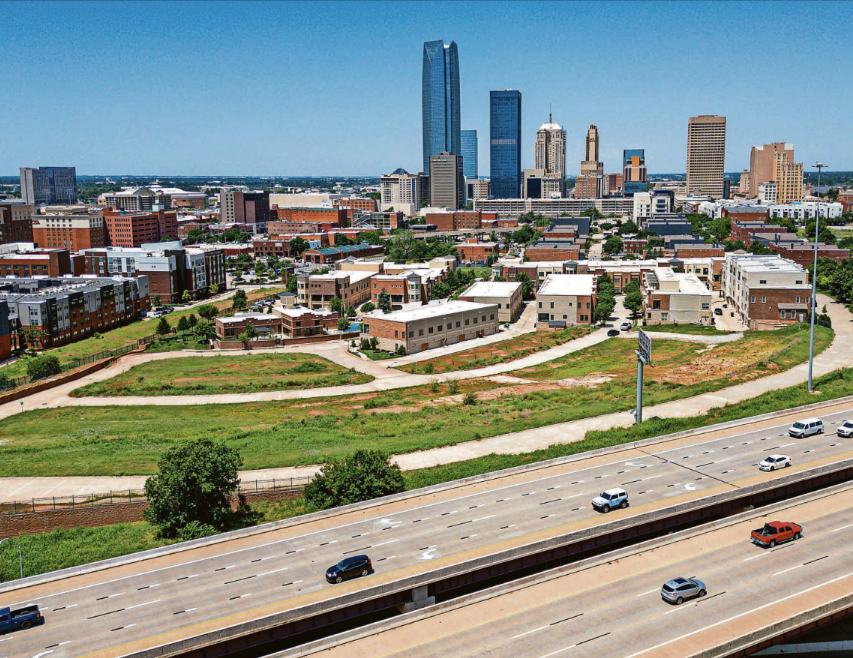
I often think back to the Oklahoma City of 20 years ago, which is when I first arrived in our fine city. Our skyline didn’t have gleaming glass towers or restored historic hotels. Bricktown was a small collection of restaurants, not a thriving entertainment district. We dreamed of maybe bringing in the National Hockey League, not hosting NBA champions in a new $1 billion arena. But what stands out most to me is not simply how much Oklahoma City has grown — but how it has done it. What has been built here wasn’t the result of taking wild, risky swings to see what heights might be reached. It came from leaders coming together around a long-term vision and, crucially, a strategic plan to get there. It was also driven by a community willing to invest in itself in an extraordinary way.
That resilience was forged by overcoming incredible odds, moving forward through the lingering effects of the oil and banking bust of the 1980s and, later, through the unimaginable tragedy of the Oklahoma City bombing.
Projects like MAPS, the transformation of the downtown core, the Oklahoma River development and Scissortail Park did not happen overnight. Neither did the Oklahoma City Thunder, which was the vision of leaders who understood the broader impact a major league franchise could have on civic identity, economic development and national visibility.
All of these examples are the result of sustained focus, steady investment and confidence in the future of the city.
As an outsider looking in, I had never seen that type of community investment and willingness to bet on oneself. From that point on, I was sold on the future of our city.
That mindset of seeking long-term value instead of chasing short-term wins is also what makes community banks, like Kirkpatrick Bank, important to helping local businesses grow and sustain that growth over time.
As long-term partners in Oklahoma City’s growth, community banks have helped finance local businesses, commercial development and investment across the community. Much like the city itself, we often succeed by taking a long-view approach, supporting businesses through difficult cycles and continuing to invest in relationships even during uncertain periods.
There is an important lesson in that for businesses today, and it is something I discuss with clients often. The mantra of “slow is smooth, and smooth is fast” is one I reference often.
Interest rates remain elevated compared to recent years. Technology is evolving rapidly, with artificial intelligence reshaping industries almost overnight. Economic conditions are shifting quickly, and even the energy sector has been roiled by global conflict and market uncertainty.
In this environment, it can be tempting to react to every headline or aggressively pursue growth simply because competitors are doing the same.
But sustainable growth usually comes from something less dramatic: strong fundamentals, disciplined decision-making and long-term confidence.
Sometimes responsible banking means helping a business move forward confidently on an opportunity. Other times, it means asking harder questions about leverage, timing or sustainability. Those conversations are not always easy, but they are necessary.
Responsible banking is not simply about approving deals as quickly as possible. It is about helping businesses make decisions that can withstand changing economic conditions.
Oklahoma City’s growth story was built through steady investment, trusted relationships and confidence in the future. The businesses that succeed over the long term will likely be the ones that embrace those same principles.
Kirkpatrick Bank is not responsible for the product, service, or overall website content available at this third-party site. Our Privacy Policy does not apply to linked websites and you should consult the privacy disclosures on that site for further information.